The dinosaur asked for the meteor
…and paid for it.
We've wished for thinking machines for as long as we've told stories. Now we're building one, with our data, our power bills and our retirement money. Cheer it or protest it, you're holding a piece of the bet.
Everyone's in it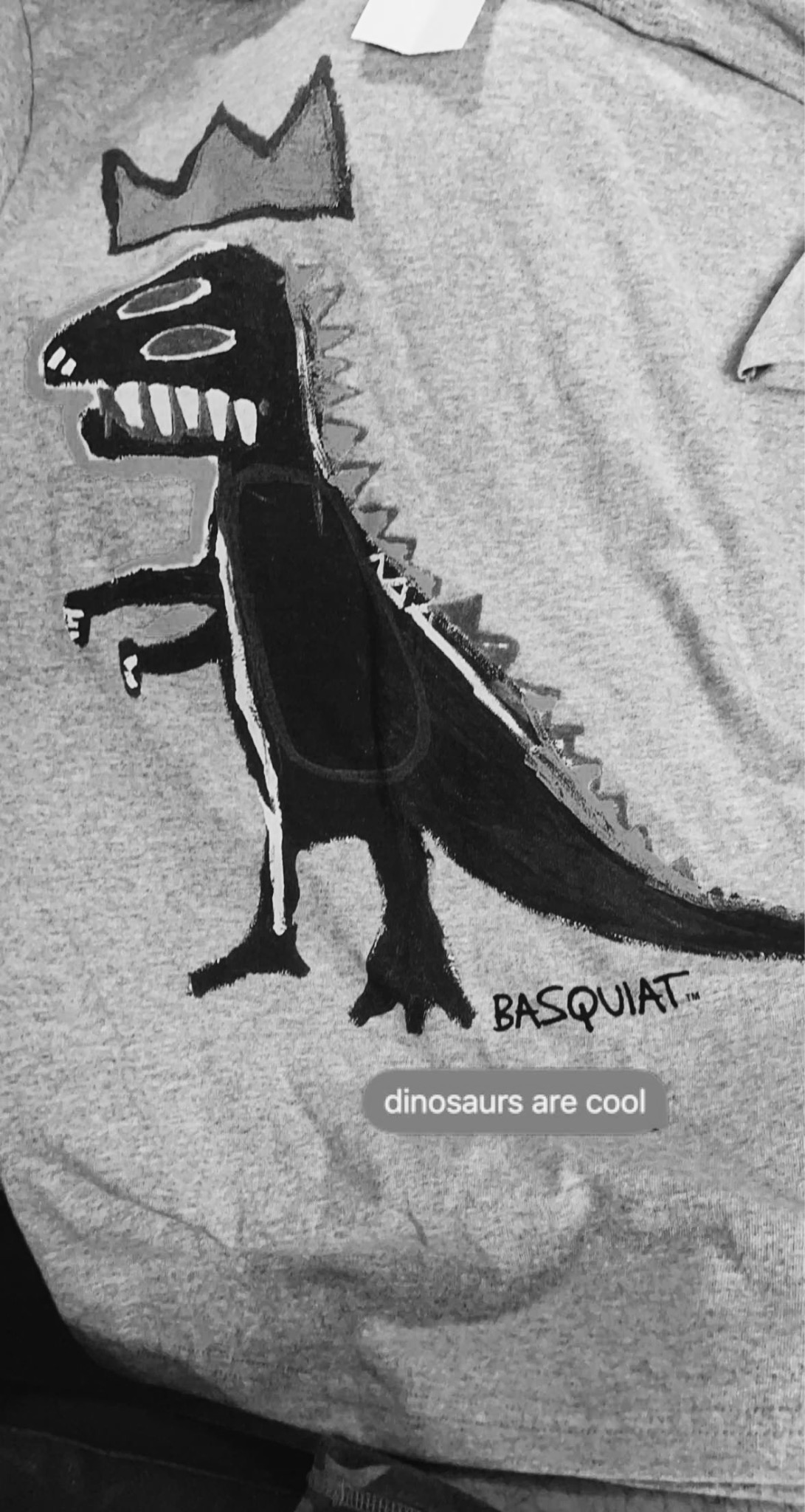
Read this first
This whole paper is backed by one honest premise: I know that I know nothing. Every claim is labelled for how sure we are, every number shows where it came from, and anything we couldn't check is marked. Question all of it.
Not financial advice
Research and education only. Nothing here recommends buying, selling or holding anything. It may be wrong. Do your own research and talk to a licensed professional before any money decision.
Disclosures
- AI tools were leveraged in this project.
- AI tools used in this project include a model from a company discussed in this paper.
- No compensation from any company named. Public sources only.
Read it like this
Headline numbers were checked against primary filings. Many 2026 facts come from news. Samples are small, analogies aren't forecasts, and nothing here can time anything.
We've been asking for this for as long as we've told stories
O The "meteor" here means a financial shock: a repricing of the balance sheets built around AI. It isn't a claim that AI ends anything. Throughout, it could be the meteor. Never is.
- 3rd c. BCTalos, the bronze man built to guard Crete, in the Argonautica. A myth.
- 1st c. ADHero of Alexandria describes automata, including a self-moving puppet theatre.
- 1206Al-Jazari's Book of Knowledge of Ingenious Mechanical Devices: clocks and automata.
- 1768–74Jaquet-Droz's Writer, an automaton that still writes today.
- 1770The Mechanical Turk, a chess-playing "machine" with a human player hidden inside.
- 1818Shelley's Frankenstein.
- 1920Čapek's R.U.R. gives us the word "robot".
- 1950Turing asks "Can machines think?"
- 1955–56The Dartmouth proposal coins "artificial intelligence".
- 1978Television imagines robotic Cylons.
The Mechanical Turk was a thinking machine with people hidden inside. So is this one.
O Today's AI runs on people too: our data and writing, the labour that labels and checks it, our power bills, and soon our savings through index funds and IPOs. Society wished for this machine before it had a word for it. The wish itself could be the meteor.
From using the internet to living inside it
E The idea is old. In 1991 Mark Weiser wrote that "the most profound technologies are those that disappear", calling it ubiquitous computing. Since then the names have kept coming: the Internet of Things, the Fourth Industrial Revolution, RAND's "Internet of Bodies" (devices that collect health data or change how the body works), and human-computer integration, research into making people and machines "closely interwoven".
I Every layer of that weave produces the data and demand AI feeds on, and moves daily life onto the same clouds and grids. A household can skip a chatbot. It can't skip the networks its phone, its paycheck and its groceries run on.
O The author calls it the woven web: computing woven into bodies, cities and money.
A web of promises
I The AI build-out isn't one company's bet. AI labs promise to buy hundreds of billions of dollars of computing power. Cloud companies count those promises as future salesCalled "backlog": contracted work not yet delivered or paid for. It counts promises, not cash.. Chipmakers invest in and guarantee their own customers. Builders borrow against AI chipsGPUs: the graphics processors that train and run AI. New generations arrive about every year, so older ones lose value fast. that wear out faster than the loans. Banks, private lenders"Private credit": investment funds that lend directly to companies instead of banks. Less regulated and less transparent than bank loans., insurers and index fundsFunds that buy every stock in an index like the S&P 500, weighted by size. Most 401(k)s hold them. hold the debt.
One year of AI spending vs history's biggest projects (in 2026 dollars)
Sources: company guidance; Planetary Society; FHWA; Brookings. Inflation-adjusted with CPI-U.
I Read these as a rough gauge, not a precise gap. For scale: one year of this spending is about 2.3 times the entire Apollo program, adjusted for inflation. If the bet goes wrong, our evidence says it's more likely a slow credit squeeze than a flash crash, and it reaches households through their retirement, their jobs and their bills.
We built it a body
I AI didn't arrive alone. It's the latest layer on a body people have been building for more than 80 years, and every layer was paid for by the public.
| Part | The advances | What the public supplied |
|---|---|---|
| The brain | The artificial neuron (1943), backpropagation (1986), the transistor (1947), the chip (1958–59), Moore's law (1965), CUDA (2007), AlexNet (2012), the transformer (2017) | Taxes for research; gamers' money built the GPUs |
| The senses | Digital image sensors (1969 onward), GPS (1973, full in 1995), the iPhone (2007), 21.1B connected devices | Bodies and behaviour as data |
| The nervous system | ARPANET (1969), TCP/IP (1974, switched on 1983), the World Wide Web (1989–91), cloud storage (2006) | Users, attention, subscriptions |
| The memory | Storage fell from about $300,000 per GB (1980) to about a cent (2022); Linux (1991), Wikipedia (2001), Common Crawl (2007) | Our writing, posts and code |
| The arms and legs | The first factory robot (1961), APIs, software agents, robots | Labour |
| Coordination | The Bitcoin whitepaper (2008), open source | Early adopters |
| The metabolism | The first power station (1882), then the grid | Ratepayers |
I The ideas were open, but the capital to finish the body is private, concentrated and increasingly borrowed. Now the public is being asked to own that capital too.
First we were the product. Then the customer. Then the ratepayer. Now the owner.
O The author's hypothesis: consumers funded every layer. It would be wrong if AI revenue comes mainly from savings that flow back to people as lower prices, and household exposure stays small.
The bet is bigger than the business
Spent this year, needed every year, earned today
Spent: company guidance. Needed: our estimate at a 9–10% return. Earned: an upper bound from filings and reports.
I Anthropic appears often in this paper because it's the only AI lab with public filings. Its numbers are the ones we can verify.
What lenders and investors demand
E As of October 13, 2026: the 10-year Treasury paid 5.21%, top-rated corporate bonds about 6%, single-B bonds about 8.2%, and GPU-backed loans about 6–9% all-in. I At the roughly 9% hurdle the giant cloud companies face, the build-out needs about $375B a year. Each extra point of interest adds about $15B. The giant cloud companies can carry this; the heavily borrowed builders in the middle are where the strain would show first.
What is the market really pricing?
O The author's theory: pricing AI is pricing how much cost, labour and friction it can remove, plus what new scale it creates.
| If AI makes exposed work this productive | Savings on the ~$3.3T of exposed US wages |
|---|---|
| 1.2x | ~$550B |
| 2x | ~$1.65T |
| 10x | ~$2.97T |
| 100x | ~$3.27T |
I Model scenarios, not claims. If AI vendors keep 30% of the savings, the build-out pays at about 1.7x. Going from 10x to 100x barely adds anything, because you can't save more than the wages themselves. So a price that implies a huge multiplier has to rest on new markets and new scale, not on replacing workers. E Measured so far, on specific tasks: support agents +14%, a coding task about 56% faster, experienced developers 19% slower.
E Labour's share of income is at a record low, 53.0% (BLS). Early-career (ages 22–25) employment in AI-exposed jobs fell about 13% relative to others (Stanford, 2025). I It's too early to blame either on AI.
A machine doesn't need lunch
E A worker costs about 1.43x their wage once benefits are counted. Token prices for the same capability fall about 10x a year. I But oversight and errors set a floor: in our worked example, a support bot only beats a person above about 36% resolution. Outsourcing, call centres and offshore IT feel it first.
Who keeps the savings
I AI's value is mostly waste removed, which pushes prices down. Railways, 1920s utilities and 1990s fibre all changed the world while many of their builders and lenders lost money. AI can be an economic success while the flagships are overpriced, if the savings flow to users instead of vendors.
Who owes whom
E We mapped 63 deals between the AI companies; 57 are verified, worth about $1.64 trillion in headline value. There are 39 money loops, where money goes out and comes back as revenue (the largest verified: Amazon → OpenAI → Amazon, $50B). Only 4 of 63 deals carry anything like margin. Nvidia guarantees up to $105B of OpenAI-related leases.
| Vendor | Backlog (date) | Share promised from inside the web |
|---|---|---|
| CoreWeave | $132.5B (Sep 30) | 45% |
| Microsoft | $677B (Sep 30) | 44% |
| Amazon (AWS) | $578B (Sep 30) | 43% |
| Google Cloud | $560.8B (Sep 30) | 22% |
At three key vendors, more than 40% of the backlog is promises from inside the same web.
I Backlog is contracted promises, not cash paid. These deals behave like derivatives: warrants tied to purchases act like options, guarantees act like insurance, equity-in and purchases-out act like swaps. None is cleared, margined or marked to market. That's our inference, not a regulator's finding. (Oracle's $664B backlog has no verified share; a press-reported $300B deal would make it about 45%.)
The ladder 2008 climbed
E Four rungs are documented: AI-capex bonds; off-balance-sheet SPVs (Meta's Hyperion bonds, rated A+, later traded down); data-center lease bonds; GPU-backed loans now inside AAA-rated equipment bonds. A fifth rung, repackaging, is reported in the press but not confirmed. I In the 2000s, mortgages took about 2–3 years from that rung to the break.
Collateral that wears out
E GPUs are depreciated over 5–6 years in most filings. One-year H100 rental contracts bottomed near $1.70/hour in October 2025, then recovered. I GPU loans test cash-flow coverage, not GPU value, so decay bites at renewal and refinancing time, not through margin calls.
Money from abroad, money from the pipes
E SoftBank's $40B bridge loan is due 2027-03-25. Gulf funds anchor lab rounds. The Fed's overnight cash buffer is near zero and reserves are about $3.0T. I A shock abroad, or a squeeze in short-term funding, reaches the weakest links first.
You're holding it, protest or not
Where $100 in a typical S&P 500 index fund goes
Nvidia, Apple, Microsoft, Amazon, Alphabet, Broadcom, Meta. Source: SPY holdings, Oct 1, 2026.
Index funds have to buy
E Anthropic has filed to list on Nasdaq ("ANT"). New public buyers would get 6.3% of the shares, existing holders keep 91.0%, and about 2.7% goes to strategic investors. The Nasdaq-100's fast-entry rule adds a very large new listing within weeks, so index funds must buy it, and buy again as lock-ups end 180 and 365 days after listing (about May and November 2027 if it lists this month). I We estimate roughly $2–12.5B of forced index buying, most likely $2–6B.
Banks and the names from 2008
E Loans to AI-adjacent industries are about 13% of large banks' business-loan commitments (about $450B); about $150B is drawn, roughly 0.8% of assets. Separately, banks lend $2.08T to non-bank financial firms of all kinds (not AI-specific, Fed data for September 2026), and that is where much private credit gets its funding. Credit markets are already flinching: Oracle's default-insurance cost hit a record in July 2026 and CoreWeave's notes yielded about 15% in October (reported). E The large banks that arranged 2008's mortgage bonds also arrange today's AI IPOs and GPU loans. Any deal this size uses these firms, so this is a documented role, not an allegation. I What rhymes is the fee model: get paid to originate, then pass the risk on. What changed: more bank capital, yearly stress tests, cleared swaps.
Gas, groceries and gasoline are not AI channels; the 2026 gasoline jump is an oil shock. Electricity is the real one.
You can't opt out
Critics raise real issues, and our own data backs several of them: power bills in the PJM states, pressure on entry-level jobs, and concentrated financial risk. The structural point is different. The money that builds AI flows through channels almost every household uses, critics included. That's entanglement, not hypocrisy.
- The platforms pay for it. E Meta earned $177.4B from ads in nine months against $135–145B of capex guidance. Google earned $240.9B from ads, including YouTube, while Alphabet spent $132.0B on capex. Content trains it. People watching it funds it.
- The clouds hold your life. Phones, photos and streaming run on the same clouds whose backlogs the labs fill.
- Retirement money owns it. E 56% of US families hold stocks directly or through funds, and about a third of a typical index fund is the seven largest tech companies.
- Utility bills build the grid. Your content is training data.
The lever isn't boycotting a chatbot, arguing over whether a video is real, or protesting AI art. It's where the money and the rules sit.
I The bigger question is whether this goes the right way: whether the rules keep pace with the build-out and stay balanced. With this much at stake, that balance matters more than any single fight over a tool.
I How the commitments are financed and disclosed, who carries the debt, how power costs are split, what index and pension exposure looks like: knowing the structure lets people aim at the part they actually object to. O The author's framing: people don't know what they're fighting against. It would be wrong if a typical household's measurable exposure turns out to be negligible.
The case that it works
E Nvidia's data-center revenue grew 117%. The big clouds are growing fast. About 41% of large firms use AI (Census). Token volumes keep multiplying. Productivity rose 2.1% year on year.
I At 30% growth, AI revenue reaches the ~$389B base case in about 3.4 years, and each lab is growing several times faster than that today. The real question is how fast that growth slows.
What slows it, what catches it
- Power. E PJM's capacity auctions cleared 6,623 MW short (2027/28) and 6,831 MW short (2028/29). I Power is likelier to delay projects than to trigger a crash; the worst case is a delay at a heavily indebted builder during a funding squeeze.
- Government cuts both ways. E Support: CHIPS grants, a US equity stake in Intel, DOE loans for data-center power. Pressure: export controls, and a Pentagon supply-chain designation of a lab, later blocked in court. I From January 2027, a single-company rescue needs a Congress and a White House held by different parties to agree.
- The Fed. E It raised rates on 2026-09-16 to fight inflation, unlike 2001, 2008 and 2020, when it cut fast. I It would likely backstop funding markets, not valuations. That favours a grind over a rescue rally.
Companies come and go. Supply and demand is forever.
O The author's framing: the build-out creates gaps that someone has to fill, whatever happens to the companies.
I Demand grows for power generation and fuel, transformers and transmission, cooling, water, environmental credits, e-waste recovery, permits and electricians. Many have forced buyers: utilities obliged to serve, firm-power contracts, net-zero pledges. Grid gear, transmission, nuclear fuel, storage, water and electricians should outlast AI. Liquid cooling and small reactors are closer to pure AI bets.
E On AI's worst trading days before our cut-off, power, nuclear and cooling fell with it, while water, credits and permitting rose.
Scored on Ray Dalio's six measures
His public framework, our scoring. He hasn't scored this himself.
| Measure | Score | Evidence |
|---|---|---|
| Prices high vs traditional measures | Partly | Anthropic's IPO range is about 12x its verified run-rate; OpenAI's reported round about 31x a press-only figure. |
| Prices discount unsustainable conditions | Partly | Needs $250–770B a year against ≤$158B today, but the labs are growing fast. |
| Many new buyers | Partly | New public buyers at listing, forced index buying, margin debt peaking at $1.502T (June 2026). |
| Broadly bullish sentiment | Not scored | No verified sentiment series. |
| Purchases financed with leverage | Partly | Over $228B of hyperscaler and Oracle bonds in 2026, GPU loans, SPVs. The labs themselves are mostly equity-funded. |
| Extended forward purchases | Yes | Multi-year take-or-pay compute (Anthropic $900.9B); 43–45% of three vendors' backlog from inside the web. |
E His trigger, from his own 2025 post: bubbles pop when the money flowing in begins to dry up, most often through rate rises and credit tightening. The Fed raised rates on 2026-09-16, and his October 2026 post called debt-and-equity-funded AI capex "the classic first stage of a squeeze".
The dinosaur bet the cycle on its wish
Mapped onto Dalio's five big forces from The Changing World Order.
O AI is the bet on the whole cycle. If it pays, productivity eases the debt load. If it doesn't, heavy debt, inequality and great-power rivalry meet an expensive bet that failed to pay. The dinosaur bet the cycle on its wish, and the wish could be the meteor.
Where it lands: your retirement, your job, your bills
One year of AI spending is about 2.3 Apollo programs. If the bet goes wrong, it reaches every household.
- Your retirement. About 35.5% of a typical S&P 500 index fund is the seven largest tech companies, and big public pensions hold 24–29% in the same seven.
- Your job. Early-career (ages 22–25) employment in AI-exposed work is already down about 13% relative to other work. This would be wrong if that gap closes by 2028.
- Your bills. The PJM grid monitor ties $23.1B of capacity costs, and 9% of wholesale power prices, to data-center load.
Follow the money: from your pocket to the AI build-out, and back
Simplified picture. Each number is from the sections above; arrows show direction, not size.
I How it would travel: lenders pull back from the heavily borrowed builders, stock prices in index funds and pensions fall, hiring and building slow, and the power bills for capacity already ordered stay.
I Why slow and credit-led rather than one crash day: stress has shown first in credit (Oracle CDS, CoreWeave bonds, private-credit gates); the pressure points are dated (SoftBank's bridge in March 2027, lock-ups in May and November 2027, GPU-loan renewals); our NQ data shows no lasting rise in jumpiness; and the Fed is tightening, not cutting. A sudden one-day shock stays possible.
The author's hypotheses, and what would prove them wrong
| Hypothesis O | It's wrong if |
|---|---|
| The dinosaur asked for the meteor | A framing, not a testable claim. The testable parts are below. |
| The system invited its own shock | The build-out funds itself from revenue, with no credit event (a top-10 AI borrower downgraded to junk, or a private-credit fund gating), through 2028 |
| It reaches households through retirement, jobs and bills | Index-fund and pension exposure falls, early-career hiring recovers, and data-center power costs stay a small share of bills by end-2027 |
| An unregulated promise that behaves like a derivative | Filings show collateral and margin sized to the exposures, or regulators treat the deals as derivatives |
| Distribution phase: risk moves from private holders to the public | The 2027 lock-up expiries pass with no price or credit stress |
| Flagship shock | The flagships raise and refinance at normal spreads through 2027 |
| Everyone's in it | Household exposure (index weight × typical savings, plus the data-center share of power bills) turns out negligible |
What people ask, and what the data says
| The question | What we found |
|---|---|
| Is AI just hype? | No, and yes. The revenue is real and growing fast (up to about $158B a year), but it's far below what's being spent (~$730B this year). |
| Is my money in it? | Probably. About 35.5% of a typical S&P 500 index fund is seven tech companies, and most families hold stocks through retirement accounts. |
| Is AI already taking jobs? | Early signs, for young workers. Early-career employment in AI-exposed work is down about 13% relative to other work. Too early to call for everyone else. |
| Will it make everything more expensive? | Not everything. Groceries and gas aren't driven by AI. Electricity is, mainly in the mid-Atlantic and Midwest grid region. |
| Will it crash the market overnight? | Less likely than a slow squeeze. The stress is showing first in borrowing costs, with dated pressure points in 2027. |
| Can I just opt out? | Not really. Your feed, your phone, your pension and your power bill all run through it. |
| Could it all just work out? | Yes, that's possible. If AI makes exposed work about 1.7x as productive and vendors keep a third of the savings, the spending pays off. |
The jargon, in plain words
- SPV
- A separate company set up to hold one asset, like a data center, and borrow against it, keeping the debt off the sponsor's books.
- SRT
- A bank pays an investor to take the first losses on a pool of its loans, so the bank can hold less capital.
- CDS
- Insurance-like protection against a borrower defaulting. Its price rises when markets fear default.
- Run-rate
- A recent month or quarter of revenue multiplied up to a year. Not a full year of reported revenue.
- Backlog / RPO
- Contracted future revenue not yet delivered. It counts promises, not cash.
- Lock-up
- A period after an IPO when early holders agree not to sell, often 180 days.
- Fast entry
- A Nasdaq-100 rule that adds a very large new listing after about 15 trading days, so index funds must buy it.
Question it. Rebut it. Ask.
You can post without an account and without your name. The author reads every post before it shows, so yours won't appear straight away. Be civil and cite sources: see the comment policy. Corrections made because of a reader are listed in the corrections log.
General reactions to the paper.
Think a claim is wrong? Pick the claim, say what is wrong with it, and show your evidence. Strong rebuttals get a public reply and, if you're right, a correction.
Ask anything. Good questions can become the next paper.